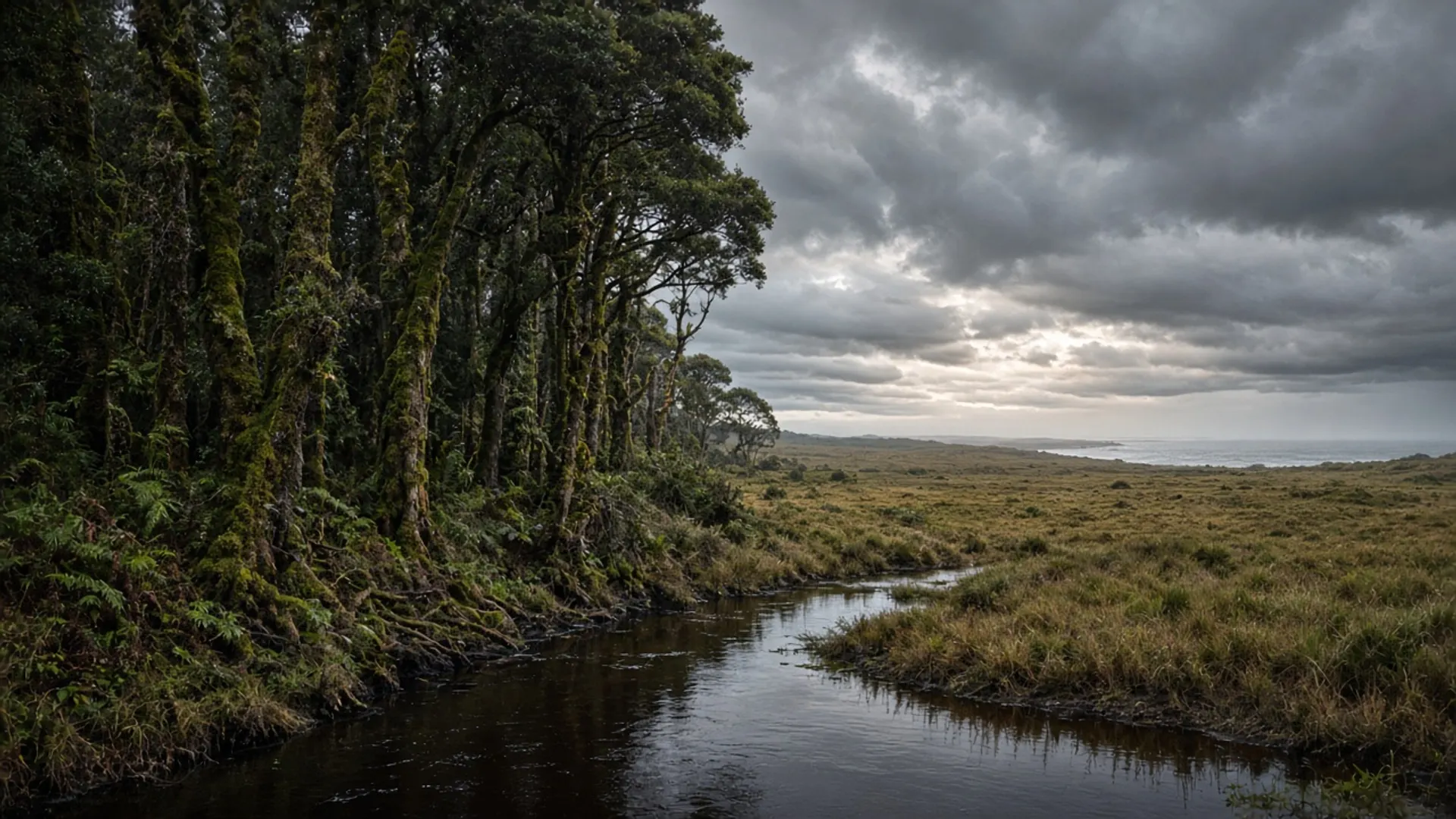
Plan Cape Grim as a scientific and geographic headland, not as a casual beach day. It is the far north-west tip of Tasmania, facing uninterrupted Southern Ocean westerlies — the same Roaring Forties fetch that scours Arthur River. The Cape Grim Baseline Air Pollution Station, operated in the CSIRO / Bureau of Meteorology scientific tradition, measures atmospheric composition in air that has travelled long distances over the ocean. That public science story is why the cape is famous. It is not a picnic brand.
If you wanted turquoise sand, Boat Harbour is the north-coast cove. If you wanted a station and a wind that has not recently crossed a city, this is the pin — still with access limits, still with weather that can cancel you.
Clean-air measurements, not a slogan
Cape Grim’s station is one of the world’s important baseline sites for greenhouse gases and other atmospheric traces in the southern hemisphere. Prevailing westerlies over the Southern Ocean deliver air that is, in the scientific literature, among the least terrestrially polluted routinely sampled. That is a measurement fact. It is not a reason to stand on a cliff edge without a jacket, and it is not a ranking of “purest holiday”.
The station is operational infrastructure. It is not a drop-in museum unless a current official program says so. We have not verified public visiting hours, viewing platforms, or any interpretation centre attached to the site. Treat such details as unverified until the managing agencies say otherwise. Do not wander into compounds. Do not drone a sampling mast.
This is Palawa Country. A baseline station is a late instrument on an old headland.
Not a casual beach, and not a 2WD afterthought
The north-west tip is remote relative to Burnie, even when the road is sealed or formed. Wind is the climate. Swell is the soundtrack. Clifftops are undercut. Stay on legal, formed ground. Stay behind fences. The Southern Ocean does not offer a second try.
Some parcels in this district are farm, some are reserved, some are scientific. Tenure is not a vibe. Check the managing authority. A national-parks pass applies when you enter a national park; Cape Grim’s fame is the station and the headland, not a substitute for Rocky Cape or Arthur-Pieman rules. Parks Tasmania still wins on reserved land nearby.
4WD may appear if you peel onto beaches or clay. Hire contracts often already forbade both. The cape as a lookout, when public access exists, is still a weather veto more than a vehicle brag.
Albatross Island lies offshore in the same maritime neighbourhood as a restricted seabird site. Do not add a landing fantasy to a headland day.
How it sits in a north-west week
From Burnie or Smithton, Cape Grim is a committed north-west outing. Pairing it with Arthur-Pieman sand is how people run out of daylight and judgement. Pairing it with Beauty Point is a map lie. Burnie around sketches coast-versus-hinterland; this cape is the far-west scientific chapter of the coast.
Season: summer still means wind. Winter means more of it and less light — when to visit. There is no month when the Roaring Forties take a holiday. Guided north-west days sometimes include a “clean air” stop; we name no operators and invent no prices — tours.
What this page will not do
It will not quote a parts-per-million number as if we were the Bureau. It will not invent a visitor centre tariff. It will not call the cape a secret beach. It will not copy archive adjectives.
Stand, if you are legally able to, in air that has crossed an ocean. Wear the jacket. Leave the station to its work. For the island’s west-versus-east climate sentence, about Tasmania. For swimming, pick a different shore. Cape Grim is a measurement, a wind, and a reminder that Tasmania’s north-west is not a postcard cove with better parking.