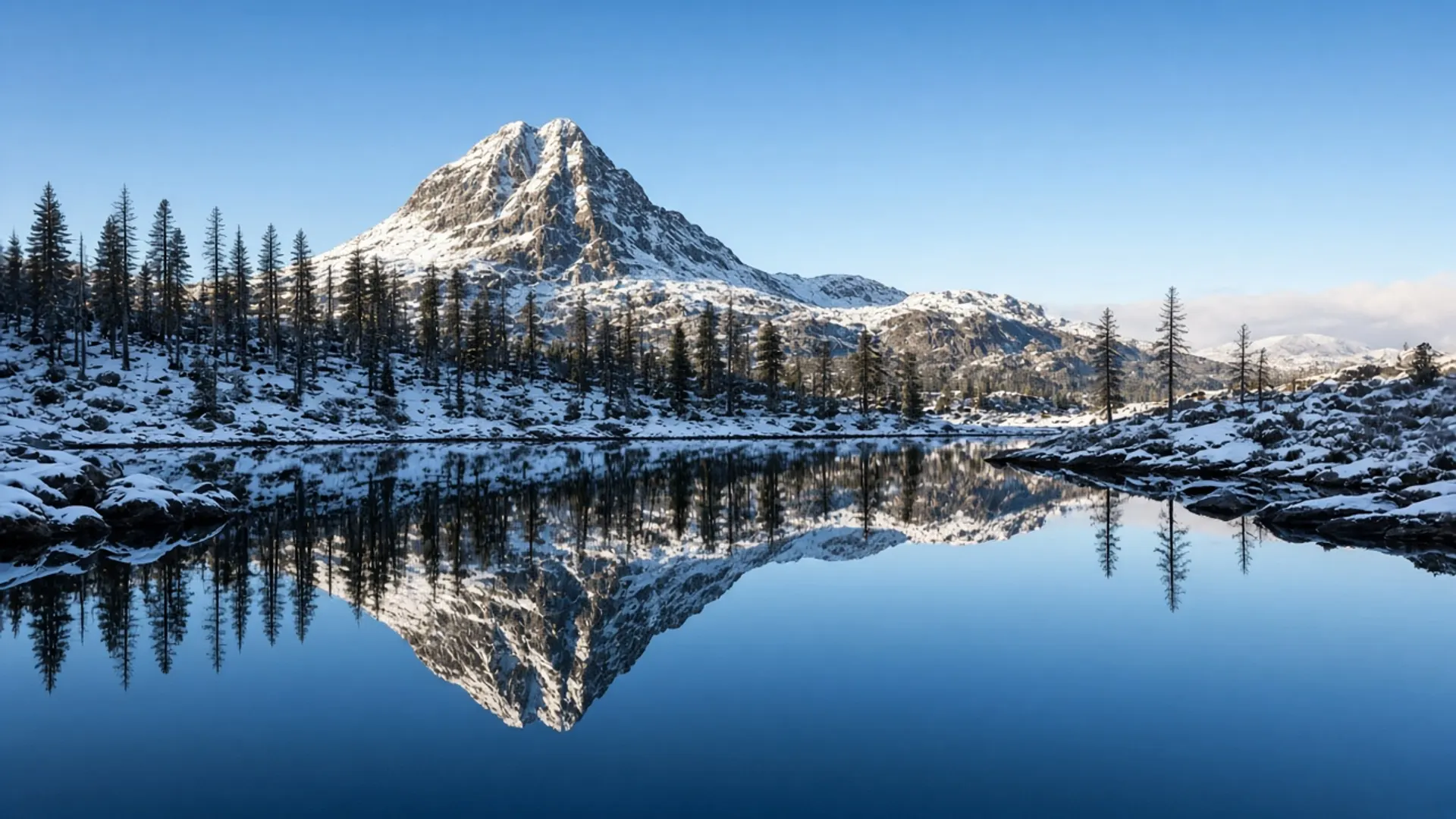
Confirm current trail and road status before you treat the Blue Tier as a day you have already packed for. It is a high, wet, forested plateau in Tasmania’s north-east, in historic tin country, with walking tracks and, in the wider Derby–Blue Tier neighbourhood, mountain-bike trail networks that are managed, rerouted and sometimes closed. A blog from a dry October is not a grading report. Parks, council and the current trail manager are.
The reward is rainforest, granite tors in places, and a highland climate a short map-line from the east coast. The cost is mud, cloud, and the possibility that the trail you wanted is shut.
Highlands, tin, and Palawa Country
The Blue Tier sits inland from the St Helens and Bay of Fires coast, above the north-east mining towns such as Branxholm and Derby. Late-nineteenth and early-twentieth-century tin brought people, tramways and clearings. Forest moved back. Poimena is one of the historic names on the plateau. Relics may exist; they are not a licence to fossick or to pocket iron.
This is Palawa Country with wet eucalypt and rainforest communities that feel closer to the west than to the dry Fingal Valley around Avoca. Tree ferns, myrtle and mountain weather are the grain. Leeches after rain are not a personal insult.
Tenure is mixed: reserved land, forestry, council roads, dedicated bike trail. A national-parks pass applies when you enter a national park. The Blue Tier is not “Freycinet with moss”. Check which reserve name you are in on an official map, and pay the right instrument.
Walking and riding — status first
Walking tracks on the tier have included rainforest circuits and historic-mining walks. Mountain-bike trail development in the north-east — often discussed under the Derby / Blue Derby umbrella, which is adjacent geography rather than a product we endorse — has made this highland a riding destination in public conversation. None of that is a reason to skip today’s closure notice.
Before you go:
- Check Parks alerts if your walk enters reserved land.
- Check the current trail operator or land-manager status for bike networks.
- Check forestry and council roads after rain or fire.
- Carry layers. Highland weather is not the St Helens forecast.
We will not publish a trail-by-trail grade or a “best descent”. Grades change when a bridge fails. Rankings are how people ride closed lines.
You do not automatically need a 4WD for sealed approaches to trailheads that are currently open. You may need clearance or a veto on unsealed, wet spurs — 4WD. Hire contracts often already forbade the spur.
Fitting the tier into a north-east week
The Blue Tier is a hinterland day. The coast is a different day. People who try to ride a full network and then “catch sunset at Binalong Bay” remember the dashboard.
A plausible week from Launceston: one highland forest day, one Bridport or Bay of Fires day, perhaps a Tamar day if you still have hours — not all three before lunch. Ben Lomond National Park is another north-east highland, alpine rather than rainforest, with its own steep road and parks pass. Do not confuse the two just because both are “up”.
Boobyalla Beach and Cape Portland are the remote shore. They do not share a morning with a muddy tier descent.
Season: the plateau is wetter than the east-coast sand. Winter is cold and short. Summer can still be cloud. Autumn is often the balanced walking window on the island — when to visit — but local mud is local. Guided riding and walking days exist in the north-east; we name no operators and invent no prices — tours.
Manners in a working and reserved landscape
Stay on marked trails. The rainforest floor is not a shortcut. Do not ride walking-only lines. Do not walk e-bike-only experiments if the manager says otherwise. Pack out rubbish. Mine openings are unstable; look from a legal path.
If you came for a beach ranking, go back to beaches and pick a coast. If you came for the island’s reserved-land frame, about Tasmania. The Blue Tier is the north-east’s reminder that Tasmania’s interior is not an empty gap between granite bays. It is a climate of its own, and it publishes its own status page — which you should actually read.