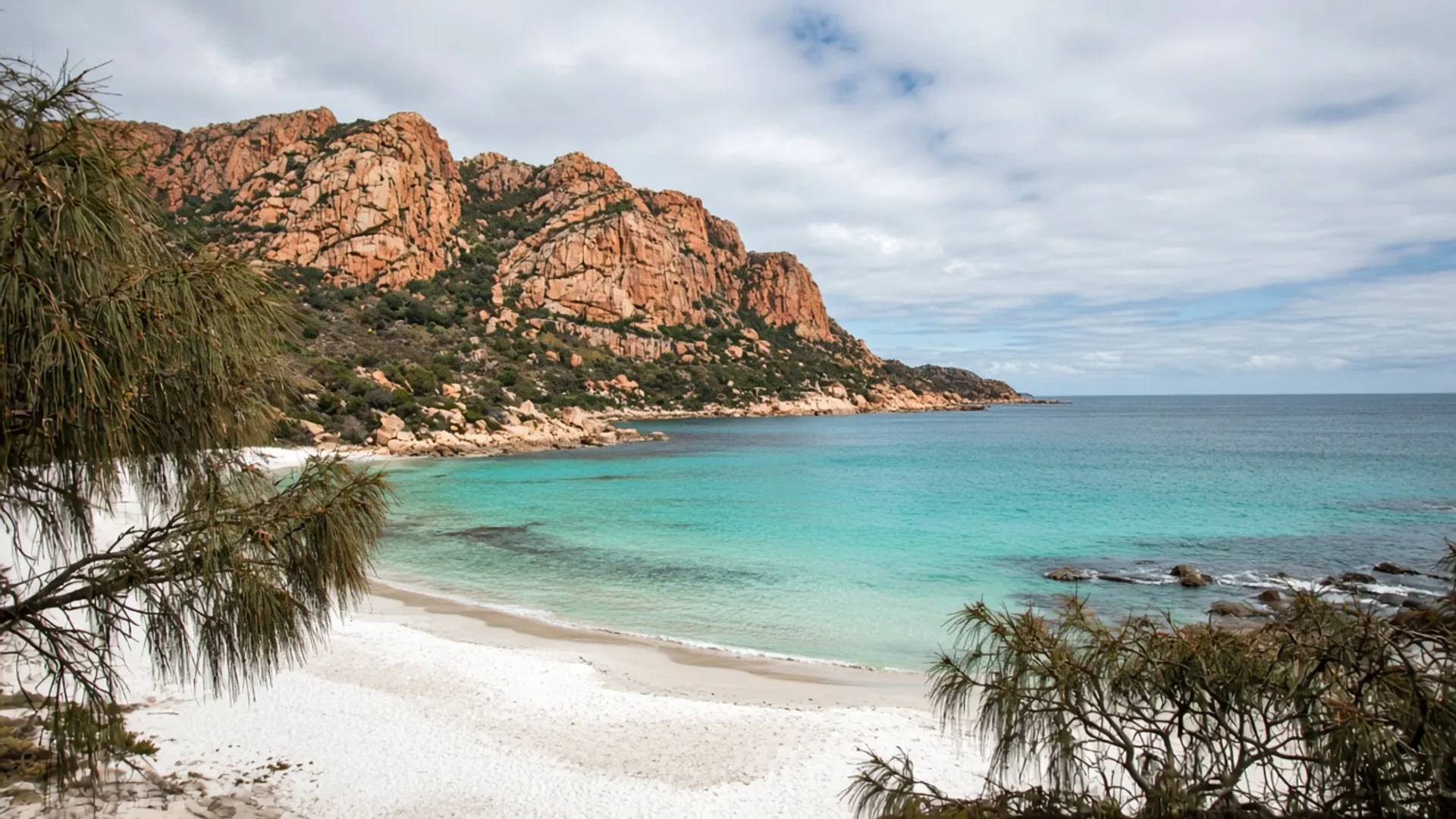
Plan the Bay of Fires as a conservation area of granite, orange lichen and long pale beaches, reached most easily through Binalong Bay, not as a secret cove you have to earn with a 4WD. Tobias Furneaux named the bay in 1773 after seeing Aboriginal fires on the shore. The colour people photograph is lichen on granite plus white sand plus often-clear water. The land manager is the Tasmania Parks and Wildlife Service, with council roads and settlements in the mix. That is the planning sentence: it is reserved coastal country with rules, toilets that fill, and a weather window.
It is not Freycinet National Park. It is not a theme park. It is not empty.
Conservation Area, not a national park pass by default
The Bay of Fires Conservation Area stretches along the north-east coast, commonly described from the Binalong Bay end toward Eddystone Point. Conservation areas are not automatically the same instrument as the nineteen national parks. Do not assume your parks pass does or does not apply to every pull-off; Parks’ current pages win. Camping, fires, dogs and drones follow posted rules that change with fire danger and season.
What you will actually stand on:
- Granite boulders with orange lichen.
- Pale, often shallow beaches in coves and longer strands.
- Coastal heath and tea-tree.
- Formed car parks at the popular southern end, then remoter beach and track country as you go north.
The northern and more isolated stretches are a different trip from the Binalong Bay swim. Some access becomes unsealed. Some becomes 4WD and tide country. Do not upgrade a hire car in your head because a photograph was labelled “Bay of Fires”.
Mount William National Park sits further in the north-east coastal system. If you enter that park, a parks pass does apply. Check the official map so you know which name you are standing in.
Binalong Bay is the gateway, not the whole fire
Binalong Bay is the township and the usual sealed-road arrival from St Helens. It is where most visitors should start. Swim, walk the obvious granite, read the signs, leave daylight for the drive. Beaches around Tasmania vary by coast; this is the east and north-east version — often clearer and drier than the west, still not a tropical lagoon.
St Helens is the service town. Bicheno is further south on the same east-coast highway logic. A three-day east-coast itinerary centred on Freycinet can add Bay of Fires only if you add days. Compressing Wineglass Bay and the Bay of Fires into one sunrise is how people remember a car.
This is Palawa Country. The 1773 name records fires that were already there. Use that fact without turning it into a skit.
How to behave on lichen and sand
Lichen is slow. Climbing every boulder for a photograph is how the orange scuffs. Stay off gardens and fenced dunes. Take rubbish. Do not cut firewood. If a season bans fires, the ban is the plan.
Wildlife — wallabies, birds, the chance of a whale or dolphin offshore — is luck and quiet, not a guarantee. Little penguins belong to other east-coast stories with their own seasonal caveats; do not assume a colony at every granite cove.
Council and Parks both post practical notes: toilets, camping bays, track work. Confirm them the week you travel, especially in January and at Easter. We quote no camping fees. We name no “best” cove. Rankings on this coast go stale when the wind turns.
Fitting it into an east or north-east week
From Hobart, Bay of Fires is a committed east-coast continuation, not a day trip you squeeze after Salamanca. From Launceston, the north-east approach through Scottsdale country or the Fingal Valley via Avoca is plausibly shorter, still not short.
Bridport and Boobyalla Beach are other north-east water. They are not the same lichen stage. Cape Portland is remoter again, with wind and access caution.
Season: east-coast summers are the most crowded here. Autumn is often the calmer swimming and walking window — when to visit. Winter is beautiful and short-day. Guided east-coast days that try to include this bay from Hobart are long days; see tours and do not buy a seat expecting a secret.
Stand on the granite. Read the Parks sign. Leave the ranking to someone else.